Macau in 1–2 Days: Food, Sights, and Getting There


Macau covers about 32 square kilometres across three connected landmasses: the Macau Peninsula, Taipa, and Coloane. The peninsula holds most of the Portuguese colonial architecture and the older casino hotels; the Cotai Strip, built on reclaimed land between Taipa and Coloane, is where the large integrated resorts are concentrated. The two zones are distinct in character and roughly 8 kilometres apart, but the territory is small enough that a single day covers both if you start early.
Foreign passport holders from most countries enter visa-free for 30 days with no advance application. Your passport is the only document required for sights and restaurants. Casinos enforce a minimum age of 21 for all gaming floors and check ID at the entrance; non-gaming areas of the same resorts (shops, restaurants, hotel lobbies) are open to all ages.
Currency is the Macanese Pataca (MOP). Hong Kong dollars are accepted at close to the 1:1 rate in nearly every shop and restaurant; change comes back in MOP. Alipay’s international tourist version and WeChat Pay accept foreign-issued cards at most dining and retail venues. Carry a small amount of cash for public buses and street stalls, where card readers are inconsistent.
Getting to Macau and Moving Around
From Hong Kong, TurboJet and Cotai Waterjet ferries run from the Outer Harbour terminal (Sheung Wan) and the Taipa ferry terminal throughout the day; crossing times are 55–65 minutes. Weekend sailings fill up by mid-morning, so book online or arrive early. From Zhuhai, the Gongbei border crossing leads directly into Macau’s Border Gate on the northern peninsula. Mainland Chinese visitors use the Mainland Travel Permit (港澳通行证), not a standard passport.
Public buses charge MOP 6 per ride and cover the peninsula, Taipa, and Cotai. Alipay’s AlipayPlus transit function converts the fare from a linked foreign card automatically, which is the most practical option if you have no local cash yet. On public buses, red-marked seats are priority seating and should be left free.
All major casino resorts run free shuttle buses from the ferry terminals and the Border Gate to their properties and back. These are open to anyone, not just hotel guests. Shuttle stops at the Taipa terminal are labelled by resort name; during busy periods they run every 10–15 minutes. Taxis are metered, but English-speaking drivers are uncommon. Have destination addresses written in Chinese. Ride-hailing apps do not operate in Macau.
The Historic Quarter on the Macau Peninsula
The colonial core runs roughly one kilometre from Senado Square (Largo do Senado) north to the Ruins of St. Paul’s. The square is paved in Portuguese wave tiles and flanked by pastel civic buildings. St. Dominic’s Church, 150 metres to the northeast, has free entry and a small display of sacred art. A cobbled pedestrian lane climbs from there to the facade of St. Paul’s Cathedral, all that survived a fire in 1835. Monte Fort sits directly behind the facade; the Macau Museum inside costs reportedly MOP 15 for general admission and is free on the 15th of each month.
English signage is consistent throughout the quarter: street names appear in Portuguese and Chinese, and museum materials are available in multiple languages. The area is compact and walkable, but crowds build quickly on weekends and mainland Chinese public holidays. Arriving before 10:00 gives you the clearest sightlines at the facade. Wynn Macau and MGM Macau are adjacent on the southern edge of the peninsula. The Tree of Prosperity show at Wynn Macau runs on a fixed schedule and is free to watch from the gaming floor (21 and over only on the casino level).
Cotai Strip and Taipa Village
The Cotai Strip is a 3-kilometre stretch of integrated resorts on reclaimed land. The Venetian Macao is the largest, with a canal-themed shopping floor and a Lord Stow’s Bakery outlet at Shop 870, level 3. Wynn Palace has a cable-car gondola over a flower garden (free to ride) and evening fountain shows. The Londoner Macao and The Parisian, which has a half-scale Eiffel Tower, are within walking distance of each other. Wynn Macau on the peninsula and Wynn Palace on Cotai share a brand name but are distinct properties about 20 minutes apart by shuttle.
Taipa Village, centred on Rua do Cunha, is a 10-minute bus ride from the Cotai resorts and noticeably less crowded than the St. Paul’s area. The lane holds a dense run of snack shops, bakeries, and sit-down Macanese and Cantonese restaurants. Mok Yee Kei at No. 9 Rua do Cunha is well-known for chilled agar jelly. Tai Lei Loi Kei pork chop buns are at No. 35 Rua Correia da Silva, one block west.
What to Eat: Macanese Dishes and Where to Find Them
Macanese cooking reflects 400 years of Portuguese trade routes through Africa, India, and Southeast Asia. African Chicken (galinha à africana) is grilled in a peanut-coconut sauce with mild chili; Restaurante Litoral on the peninsula is one of the longer-established sit-down venues serving it. Minchi is ground pork or beef stir-fried with diced potato and soy sauce, finished with a fried egg on top. It appears on most local restaurant menus and costs around MOP 60–80 as of 2025. Serradura, a cold dessert of layered whipped cream and crushed Marie biscuits, is sold by the cup at dessert shops throughout Taipa Village.
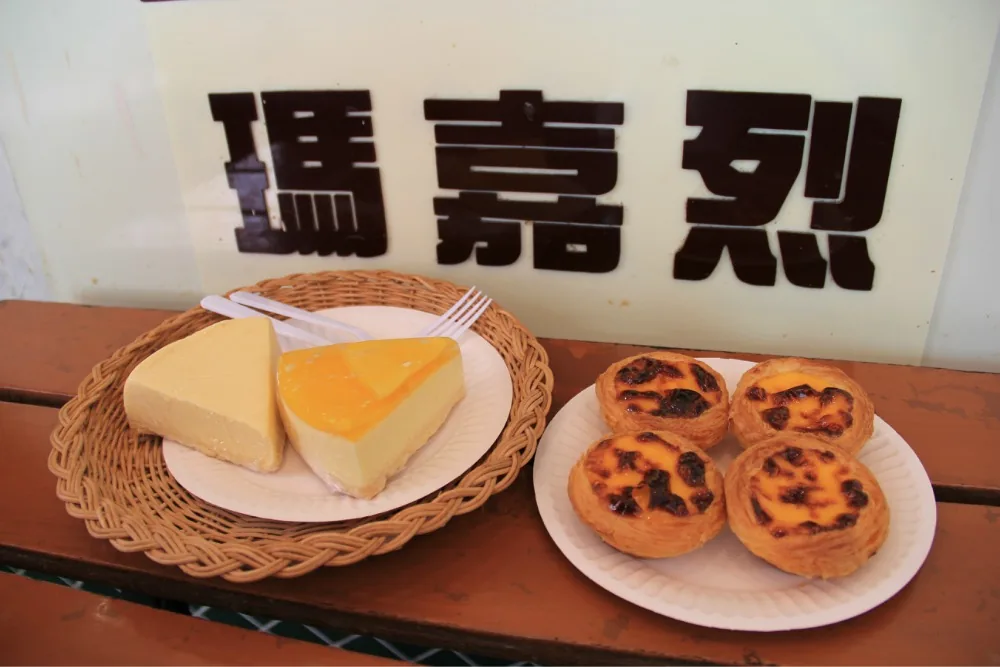
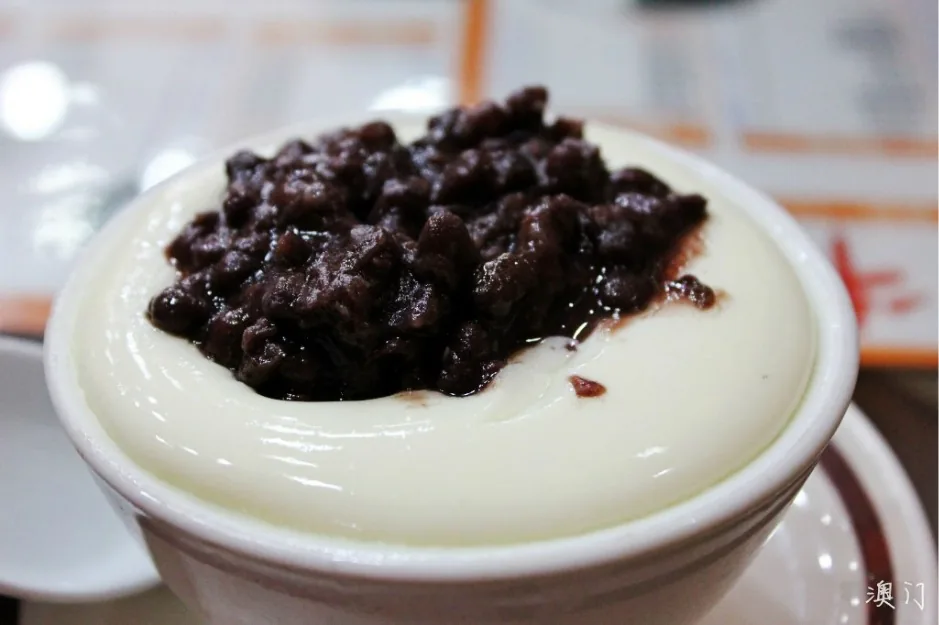
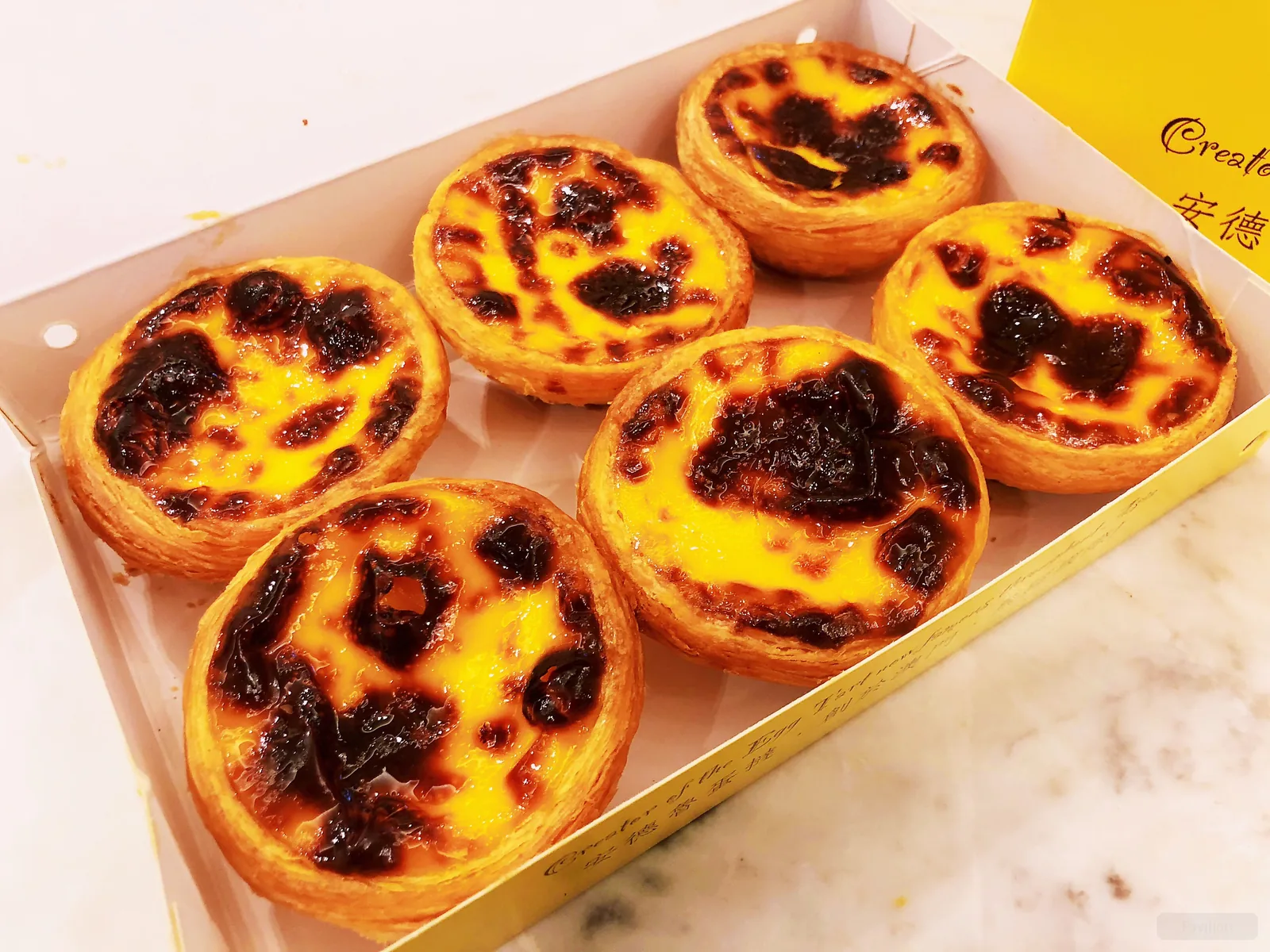
Portuguese egg tarts come from two competing kitchens. Lord Stow’s Bakery (original branch in Coloane Village; also at The Venetian, Shop 870) uses a silky, lightly sweet custard with a flaky pastry shell. Margaret’s Café e Nata at No. 66 Rua do Visconde Paço de Freguesia de Sé is the rival recipe, with a firmer custard set. Both sell for approximately MOP 12–15 per tart as of 2025. Yee Shun Milk Company at No. 381 Avenida de Almeida Ribeiro, open since 1932, serves steamed double-skin milk pudding (双皮奶) for around MOP 30–40 per portion.
For pork chop buns, Tai Lei Loi Kei at No. 35 Rua Correia da Silva in Taipa is the most-cited shop: a bone-in chop, pounded thin and fried, tucked into a Portuguese roll for around MOP 40. Expect a short queue on weekend mornings.
Total daily food cost eating at street stalls and Taipa shops: MOP 100–150 (roughly USD 12–19) for three meals and snacks. Sit-down Macanese restaurants typically run MOP 200–400 per person.
Shopping: Souvenirs and Where to Buy Them
Rua de São Paulo, the pedestrian street running downhill from the St. Paul’s facade, is the main souvenir strip. Koi Kei Bakery (No. 20A) and Choi Heong Yuen Bakery (No. 9, reportedly the oldest souvenir shop in Macau) both sell vacuum-packed almond cakes, pork jerky, and egg roll biscuits. These are the standard gift purchases; prices are similar between competing shops on the same street, and buying in bulk usually brings a small discount. Both shops have branches in Taipa Village and inside The Venetian if the St. Paul’s street is congested.
For cosmetics, Sasa at No. 1E Rua de São Domingos carries Hong Kong-priced beauty products on the Macau Peninsula. Duty-free shopping (tobacco, spirits, luxury goods) is available at DFS inside City of Dreams on Cotai; a valid travel document showing outbound departure from Macau is required. The Venetian Macao mall carries major European luxury brands alongside mid-range fashion. New Yaohan Department Store at No. 90 Avenida Doutor Mário Soares is the largest department store on the peninsula for everyday goods.
FAQ
Do foreign passport holders need a visa for Macau?
Most do not. Citizens of around 80 countries receive 30 days visa-free on arrival. A smaller group requires a prior visa or a landing visa on arrival. The conditions differ from Hong Kong’s visa policy, so check the official Macau Immigration Service list before travelling. Mainland Chinese visitors use the Mainland Travel Permit (港澳通行证), not a standard passport.
Can I use Hong Kong dollars in Macau?
Yes. HKD is accepted at nearly every shop, restaurant, and casino at approximately the 1:1 rate (1 HKD to roughly 1.03 MOP as of early 2026). Change comes back in MOP. USD and other foreign currencies are not widely accepted in shops, though hotel front desks and casino cages can exchange them. Alipay’s international tourist version and WeChat Pay work with foreign bank cards at most venues.
What is the minimum age to enter Macau casinos?
- This applies to all gaming floors, including slot machine areas. ID checks are common at entrances, particularly if you appear under 25. The restriction covers gaming floors only; hotel lobbies, restaurants, theatres, and shopping malls inside the same integrated resorts have no age restriction.
Is a day trip from Hong Kong realistic?
Yes, with planning. The ferry crossing is about 55 minutes, but add 30–45 minutes each way for check-in, boarding, and immigration. A 07:00 departure from Hong Kong gives you roughly seven hours on the ground before catching an evening ferry back. That covers the historic quarter and Taipa Village. Adding a full tour of Cotai requires either a very early start or an overnight stay.
Are the casino resort shuttles actually free, and do I need to be a hotel guest?
Free, and no booking is required. All major resorts run shuttles from the Taipa ferry terminal, the Outer Harbour terminal, and the Border Gate. Stops at the Taipa terminal are labelled with each resort’s name. The same shuttles return to the terminals for the outbound leg. During peak hours, frequency is every 10–15 minutes; late at night, check the schedule posted at the stop.
Editor’s notes
The historic quarter costs more time than money. The walk from Senado Square to St. Paul’s looks short on a map but funnels through narrow lanes that back up by mid-morning on weekends. Arriving before 09:30 on a weekday gives you the facades without crowds. Macau’s spring months (March to June) bring persistent rain; the Portuguese tile pavements become slippery, so footwear grip matters more than usual. Typhoon season runs through September: a Signal 8 or higher suspends all ferry services with little warning and you may be stuck overnight. Check the Macau Meteorological and Geophysical Bureau’s typhoon signal status before booking same-day ferries during that window, particularly July through September.
Last visited: 2026-05-01 · prices verified on 2026-05-01.